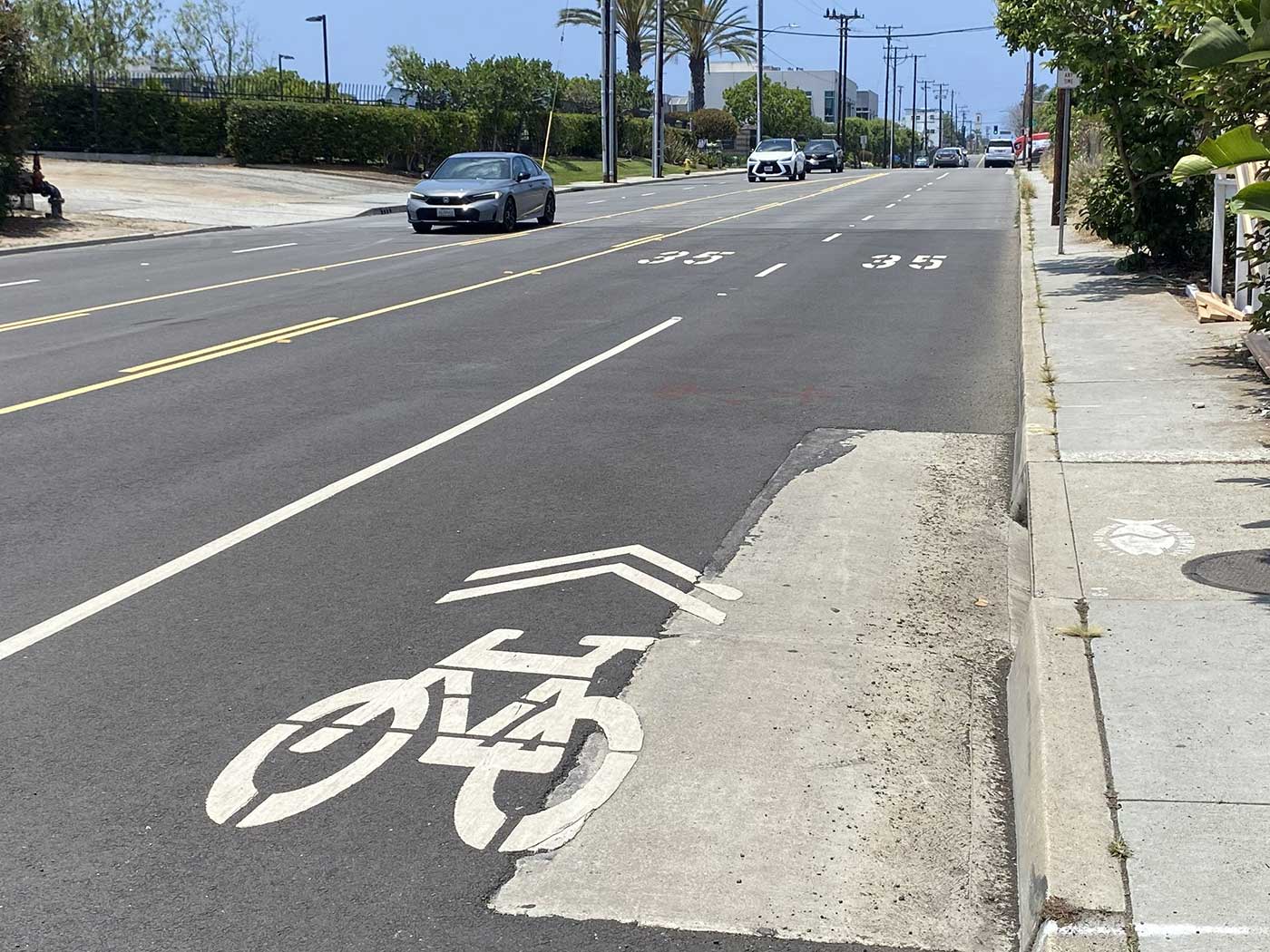
A bill signed by Governor Gavin Newsom keeps California cities from installing Class III bike lane “sharrows” on roads with higher speed limits.
Class III bike lanes are specially designated streets where bicyclists and motorists are supposed to share the same lanes. Signs and lane markings are supposed to remind drivers to slow down and to look for cyclists also using the road.
The law went into effect in 2025 and prohibits towns and counties from creating “sharrows” on streets with a speed limit faster than 35 mph. It’s a measure intended to keep cities from marking streets as sharrows that may be too dangerous for cyclists. The other hope is that cities will instead install traditional bike lanes on these streets, instead of simply relying on signage.
The Class III Bike Lane Changes
The state bill behind this change aims to shut down a local government’s attempt to put a “sharrows” label on any street they choose. It’s to eliminate the decision to designate a street as Class III simply to get out of installing normal Class II bike lanes or protected bike lanes (Class IV).
This is the way the law reads after passage:
SB 1216, Blakespear. Transportation projects: Class III bikeways: prohibition.
“…The bill would prohibit, on and after January 1, 2025, an agency responsible for the development or operation of bikeways or highways where bicycle travel is permitted from installing a new sharrow on a highway that has a posted speed limit greater than 30 miles per hour, except as specified…”
When a Class III bike lane signage is installed on a street with a faster speed limit and more traffic, it’s generally unsafe for cyclists. Riders still have the right to take any lane they need on most streets, but the Class III roads addressed with the newer law often carry more risk.
Drivers with a faster speed limit will have less time to spot a cyclist using the lane and less space to slow down. Their attempt to pass cyclists at a higher speed also brings more danger.
The new ordinance doesn’t require cities to immediately remove sharrows lane markings on faster streets that already have them. But this action is encouraged. The bill acts more strongly to prevent any new sharrow lanes from being designated on streets with speed limits set at 35 mph or more.
What Is a Sharrow Bike Lane in California?
To the eye, a Class III bike lane will look like a normal boulevard. With a Class III lane, there are no little white lines marked off along the side of the road, or plastic rods protecting cyclists as they ride separately on a path beside the vehicle lanes.
A sharrows lane is signified instead by lane markings and street signs that better warn drivers that they could have to share the lane with a rider. Class III lanes are normal traffic lanes with “sharrows” painted on the road surface. The sharrow comes from the combination of “share” and “arrow” and appears as arrows over a symbol of a bicycle.
Sharrows are designated routes that are often installed by cities on roads that are used most often by cyclists. Class III lanes are often placed on lower-speed streets that can lead cyclists a bit more safely into popular areas, such as a downtown sector.
Drivers are supposed to notice these lane markings and street signs and take more care as they travel.
There are other California vehicle codes meant to keep cyclists safe. You can check those out on our Traffic Safety and Laws page.
Contact a California Bicycle Accident Attorney After an Accident
If you come away from a bicycle accident with a serious injury and a careless driver was at fault, please consider using a California bicycle accident lawyer for your case. We offer a free, no-obligation consultation with a real lawyer.
A more expensive recovery will prompt car insurance companies to get defensive. They’ll make it much harder for you to earn the support you need to fully heal and get back on your bike again.
A Maison Law attorney fully investigates your accident and backs your case with strong evidence so insurers have no excuse to deny coverage. Your attorney would also have a good chance of earning you much more than you could earn on your own.
The best part is, if you need to hire a lawyer, Maison Law costs you nothing up front. We are only paid if we win your case for you. Then our pay comes out of the money that an insurer must send you.