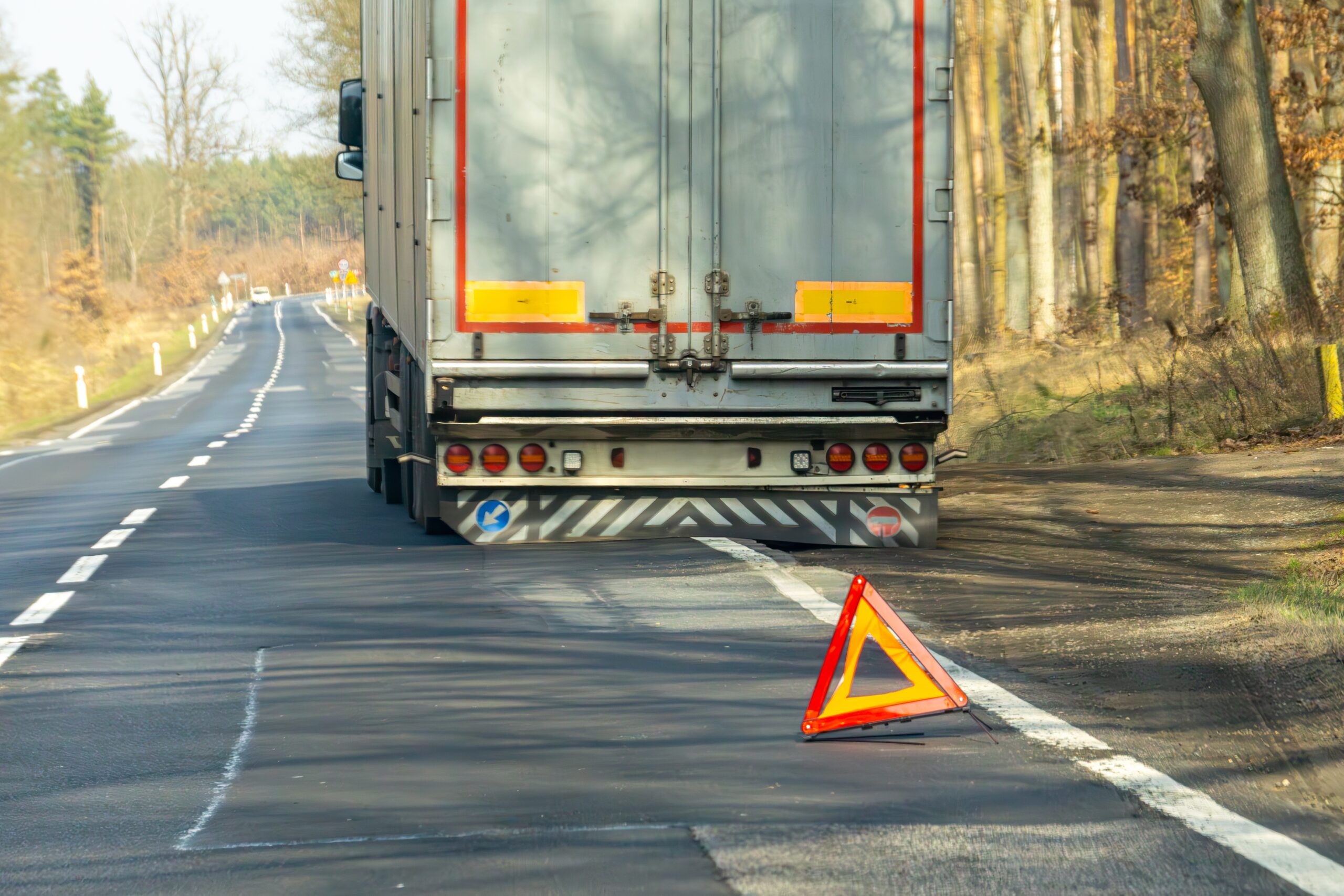
Maison Law can guide you through the claims process if you’ve been injured in a truck accident in California. You’ve probably seen a large truck broken down along the side of the road at some point, and usually with warning triangles in front of and behind it. But what you might not realize is that those warning triangles are actually a safety law. And if you’re hurt in an accident where those warning triangles weren’t used, you have options we can help you with. Set up a free consultation today to learn more.
What 49 CFR 392.22 Requires For Truck Drivers in California
Under 49 CFR 392.22, drivers have a few different requirements when they have to stop their truck along the side of the road in the event of an accident or a breakdown:
- First, they have to immediately turn on their hazard lights, and those lights have to stay on until warning triangles are in place (although it’s generally better to keep them on even then.)
- No later than 10 minutes after stopping, they have to set up warning triangles or similar warning devices around 100 feet in front of or behind the truck.
- Throughout the entire stopped period, drivers also have to do what they can to keep the truck visible, no matter what the conditions are.
It’s pretty obvious to see why these requirements are in place. A huge truck that’s stopped along the side of the road can create a serious accident risk, especially when traffic is heavy and visibility is low. And while the law is clear in terms of what truck drivers need to do, when you’re injured in an accident, it becomes more about what happened and whether or not the driver did what they were supposed to do.
Will I Be Able to Show That a Truck Driver Didn’t Use Warning Triangles?
The aftermath of a truck accident is almost always scary, no matter what the conditions are like or what the circumstances are. But when your accident happens because the driver didn’t use warning triangles as laid out by 49 CFR 392.22, being able to actually show that can sometimes be tough because the scene changes quickly.
But it’s not out of your reach to show that the driver didn’t use warning triangles or otherwise followed protocol in terms of warning you. To be able to do that, you should focus on getting a few basic details right there and then like:
- Pictures/videos of the truck, your vehicle, and the surrounding roadway. If you can safely see whether warning triangles were in place, take pictures of that, too.
- The driver’s name, the trucking company’s name, and any identifying information on the truck like logos or license numbers.
- Names and contact information from bystanders or people that helped you after.
Keep in mind that while this information is important, it’s not as important as your health and safety. You should always call 911 and report any accident first before trying to get information. And remember, there’s going to be information that’s in the hands of the truck driver and company that will give important context to what happened. Usually, that involves:
- GPS and tracking data showing where the truck stopped and when
- Dashcam footage showing whether warning triangles were placed
- Driver logs and trip records that help establish the timeline
- Driver statements and company reports explaining what happened after the truck stopped
Ultimately, you’re trying to do what you can to create a link between the driver not following the law and that leading to your accident. A missing triangle in a picture you took doesn’t automatically prove the driver never put one out. But when you put that together with statements from bystanders, logs, and other records, it paints a fuller picture of what you’re left facing. From there, though, it’s about moving forward with a claim.
Maison Law Can Guide You Through a Truck Accident Claim in California
The reason information and documentation is so important when there’s a truck accident is because there’s a lot of moving parts behind the scenes. It’s rarely just a matter of the truck driver being careless or doing something they weren’t supposed to do. But that’s not necessarily the case when they didn’t put out warning triangles. But even if you have good information, the claims process isn’t automatic. To get financial help for what you’ve lost, you have to either:
- File an insurance claim
- File a personal injury lawsuit
Insurance is usually a quicker option to getting financial help because it’s outside of court and much less formal. But it’s also totally controlled by the trucking company’s insurance carrier. They know how to defend against claims and how to push back. So if their settlement offer doesn’t cover what you need, you can then file a lawsuit. It takes more time and effort, but is a more impartial process. Plus, it gives you access to fuller “damages” associated with your:
- Current and future medical expenses
- Lost wages and reduced future earning capacity
- Vehicle repair or replacement costs
- Pain and suffering
- Emotional distress
- Reduced quality of life
- Funeral and burial expenses in a wrongful death claim
The challenge is proving what the driver did or didn’t do before the accident. That’s why it takes a deep dive into the full picture of what the driver did or didn’t do, whether the trucking company provided the driver with the necessary training and equipment, and how that all factored into your accident. One way or the other, you don’t have to try to figure it out all on your own. Our California truck accident team at Maison Law can help you by:
- Digging into whether the driver followed the federal warning-device requirements
- Pulling together photos, witness statements, and available video footage
- Looking for records that help show when and where the truck stopped
- Figure out whether the lack of warning triangles played into to your accident
The sooner you reach out for help, the better your chances are at getting a fair result. Set up a free consultation today to get started.