Maison Law and our Redwood National Park personal injury lawyers can help you if you’re injured in a motorcycle accident anywhere on park property. For as breathtaking as the views and scenery are, all it takes is one patch of bad road or other issue that can leave you facing serious injuries and other damage. We’ll guide you through the claims process and help you get better. Set up a free consultation today.
Do I Really Need a Lawyer?
All the problems that normally come with a motorcycle accident are still present when it happens near Redwood National Park. But what makes the situation different is the fact that it might have happened on government land or with a government vehicle. This brings in a totally different claims process. So, while you might not need a lawyer in every situation, it’s helpful to have the right guidance. Our team can help you with:
- Understanding your rights, so you know exactly what to expect.
- Protecting yourself if insurance companies try to shift blame onto you, which happens more than people realize.
- Looking into every detail of the accidentl—road conditions, weather, hazards, and other drivers’ actions.
- Handling the back-and-forth with insurance companies, government agencies, or property managers, so you don’t have to.
- Stepping in if your claim moves toward court, giving you confidence that someone has your back.
Basically, having a lawyer makes an extremely tough process a bit easier. You don’t have to figure out everything by yourself, or face the federal or state government with a claim. It’s also gives you a better idea of what your options are—and so much of that is based on where your accident happens.
Where Can a Motorcycle Accident Happen to Me in Redwood National Park?
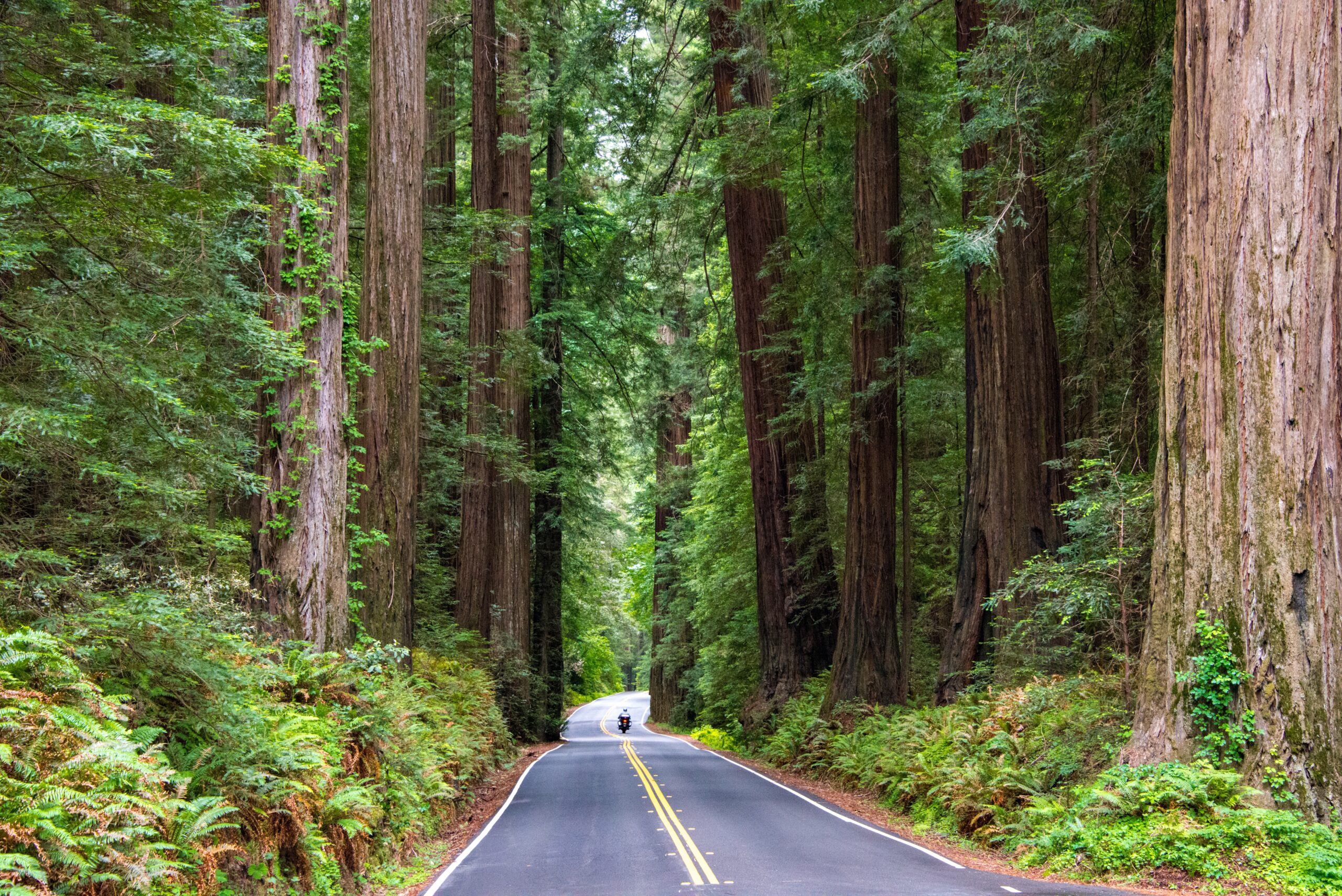
Riding through Redwood National Park is something many motorcyclists dream about. Towering old-growth trees, winding roads, and quiet forest feel like an escape from the city. But those same roads that make the ride unforgettable can also be unpredictable. Here’s where you could be involved in a motorcycle accident:
- Highway 101. This cuts right through the park, so there’s tight curves, elevation changes, fog, and frequent wildlife to watch out for.
- Forest service roads can be especially dangerous because pavement may end without warning, gravel can appear suddenly, and surfaces are often uneven.
- Mountain passes add another layer of risk, with fog, wet leaves, fallen branches, and reduced visibility.
- Campground and trailhead access roads are also risky because vehicles, pedestrians, and cyclists all share narrow spaces.
- Parking lots and recreation areas can be an issue due to tight corners, wet pavement, and distracted drivers.
Knowing where accidents commonly happen can help you understand what went wrong, document conditions, and protect your claim. And that’s important when you need to move forward.
What Information Should I Try to Get After My Accident?
As chaotic and confusing as the moments after your motorcycle accident can be, it also happens to be the best chance you might have to get important information for your claim. If you’re able (and only after you get medical help), try to get the following:
- Photos and videos that show to your bike, other vehicles, skid marks, debris, and surrounding area. Take wide shots and close-ups. Also note any gravel, potholes, wet leaves, fog, fallen branches, or missing signs.
- Exact location. Try to pinpoint the exact location of your accident. Road names, mile markers, trailheads, campgrounds, or landmarks. GPS pins or sign photos help show who maintains the road.
- Official reports. CHP, county deputies, or park rangers should respond to the scene to help clear it. Ask for copies of any incident reports or get the report number for later.
- Medical records. Keep track of every visit, test, prescription, and follow-up. This shows how the accident left you injured and is continuing to impact your life.
Even small details matter. The more you gather, the easier it is to show what happened and who might be responsible.
Who’s Liable For My Damages After a Motorcycle Accident in Redwood National Park?
Any motorcycle accident claim is going to hinge on a huge question: “Whose fault is this?” But with one that happens in Redwood National Park, the answer isn’t always simple. In legal terms, liability usually comes down to negligence—someone failed to take reasonable care, and that failure caused your accident. So then, liability for your injuries could fall on:
- Another driver that was tailgating, failing to yield, or drifting into your lane.
- Federal agencies—especially the National Park Service—that failed to fix unsafe roads, missing signage, or known issues in a timely manner.
- State or local agencies. Similarly, roads, trails, or lots managed by the state or county government could also be responsible if they didn’t fix things.
- Private groups. Certain roads, parking areas, or facilities inside the park are managed by private companies and people. They have the same duties as the government, and may share liability if there were unsafe conditions that led to your accident.
You don’t lose your rights just because the accident happened on park grounds. And once you figure out who might be responsible, it’s the first step toward making sure you’re not left with medical bills, lost wages, or repair costs on your own.
What Claims Options Do I Have After a Motorcycle Accident in Redwood National Park?
Your rights and options don’t change when you’re hurt in a motorcycle accident in Redwood National Park. But you do have to think about how to move a claim forward. Unfortunately, that depends heavily on who controls the road or area where the accident happened, because different rules apply when government agencies are involved:
- State or local government claim. If your motorcycle accident involves a California- or county-maintained road, facility, or vehicle, your claim likely falls under the California Tort Claims Act (CTCA). This process is more rigid than a typical injury claim. Under the CTCA:
- You generally must file a formal notice of claim within six months of the accident.
- The claim must involve more than $10,000 in damages.
- The government agency has 45 days to respond before further action can be taken.
- Federal government claim. Large portions of Redwood National Forest are federally managed, which means some accidents fall under the Federal Tort Claims Act (FTCA). With an FTCA claim:
- You must complete and submit Standard Form 95 before a lawsuit is even possible.
- The government then has six months to respond.
- Private claim. If your accident was caused by a private driver, contractor, or company, the process is more straightforward. In these situations:
- You can usually file an insurance claim or a personal injury lawsuit in civil court.
California law generally allows up to two years from the date of the accident to take action, but it’s all about recovering your “damages.” These typically include things like:
- Medical bills and ongoing or future treatment.
- Lost income or time away from work.
- Repair or replacement of your motorcycle and riding gear.
- Physical pain and lingering discomfort.
- Emotional stress and mental strain.
- Long-term limitations that affect your ability to ride or enjoy daily activities.
- In the most serious cases, surviving family members may also be able to pursue a wrongful death claim.
The biggest takeaway is this: starting early matters, especially when government agencies are involved. Evidence disappears, deadlines move fast, and the rules change depending on exactly where the accident happened in the forest.
Frequently Asked Questions
I didn’t think I was badly hurt at first. Is it too late to do anything?
Not necessarily. Many motorcycle injuries take time to show up, especially soft-tissue or head injuries. Getting checked out and documenting your symptoms as soon as possible can still protect your options.
What if my accident happened on a quiet road and no one saw it?
That’s common in Redwood National Forest. Photos, location markers, medical records, and ranger or CHP reports can still help piece together what happened, even without witnesses.
Am I automatically blamed because I was riding a motorcycle?
No. Being on a motorcycle doesn’t make you at fault. What matters is what actually caused the accident—things like another driver’s actions, road conditions, or missing warnings.
Reach Out to Maison Law After a Motorcycle Accident in Redwood National Park
A ride through Redwood National Park should not leave you dealing with injuries, medical bills, and unanswered questions. If you were hurt on your motorcycle, our team can help you understand your options, identify who may be responsible, and handle the complicated parts of the process.
You don’t have to figure this out on your own. If your accident happened on a park road, near a trailhead, or along Highway 101, we can walk you through what comes next—starting with a free consultation and a straightforward conversation.
