
Maison Law helps anyone in California that’s been through a car accident, and while it can happen to anyone, seniors are unfortunately more susceptible.
Our team understands what you and your family are going through in this situation and can help. Set up a free consultation today to talk about your options.

Are Seniors Really in More Car Accidents in California?
When older adults are involved in car accidents in California, the outcomes can vary widely depending on how the accident happens. A rear-end collision at a stoplight is different from being broadsided in an intersection–and the injuries can be just as different. Some accidents leave people shaken but mostly okay. Others can lead to broken bones, head injuries, or worse. And for seniors, who may already have existing health concerns, the risks are even higher.
Data from the California Highway Patrol’s Transportation Injury Mapping System (TIMS) shows just how often these accidents happen.
Between 2021 and 2025, seniors were involved in:
- 23,509.4 car accidents per year that left them with injuries or were fatal.
Broken down by year, you can see just how plentiful accidents involving seniors are:
- 2021 – 21,295 accidents
- 2022 – 22,590 accidents
- 2023 – 23,977 accidents
- 2024 – 23,981 accidents
- 2025 – 24,253 accidents
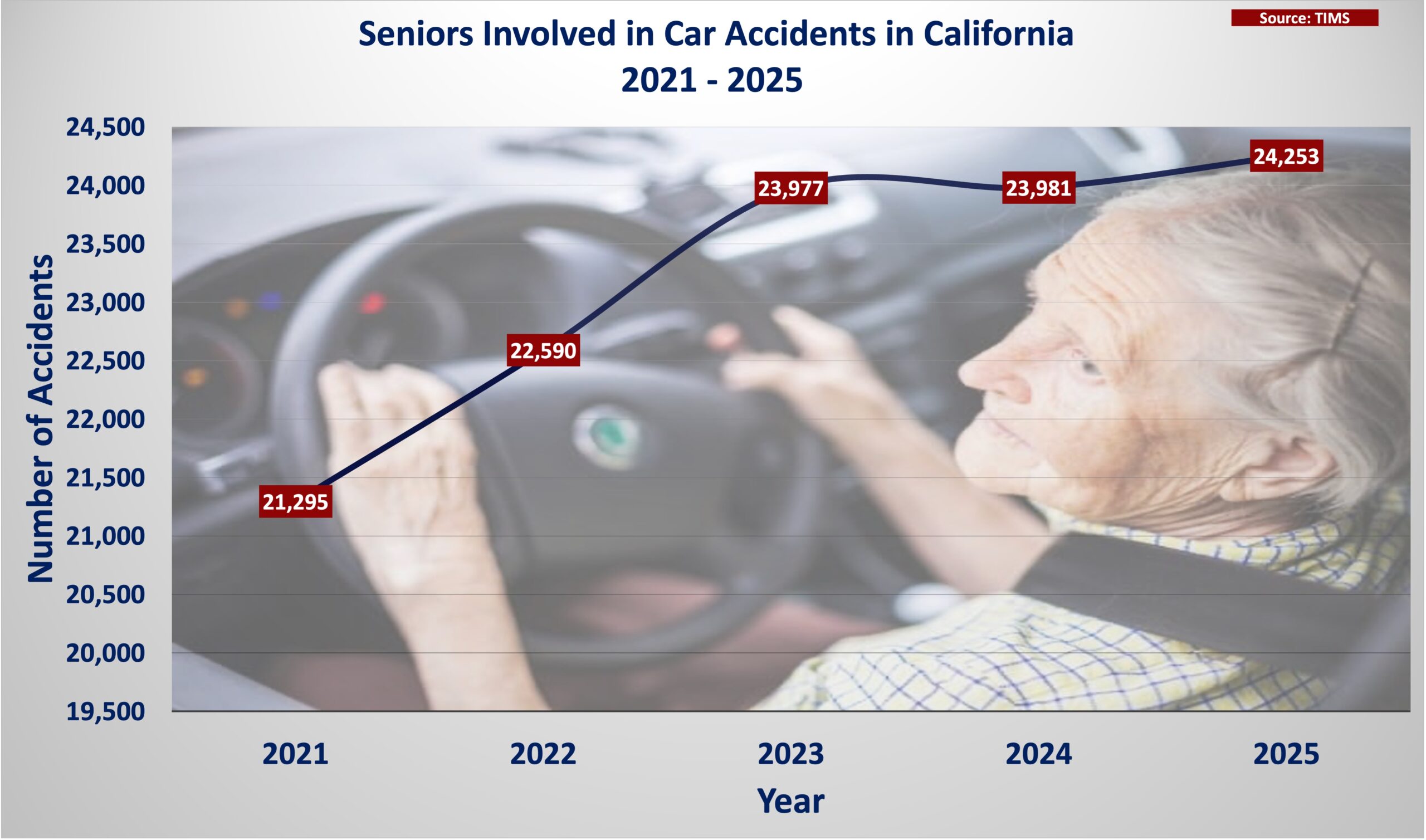
That’s a big number of accidents—and it gives you a sense of how widespread the issue is. But it doesn’t fully explain why these accidents happen. The truth is, many of them come down to the realities of aging and how that affects someone’s ability to drive safely. Some of the most common challenges include:
- Vision and hearing loss. As people age, it’s common for eyesight or hearing to decline. That can make it harder to spot signs, judge distance, or hear approaching vehicles–leading to missed cues and dangerous situations on the road.
- Cognitive slowdown. Aging can also affect how quickly someone processes information or reacts to sudden changes. Even a slight delay in decision-making or reaction time can make the difference in avoiding an accident.
- Disregarding concerns from loved ones. For many seniors, driving is tied to their independence. So even when family members express concern, some older drivers continue to get behind the wheel–sometimes when it’s no longer safe to do so.
- Struggling with newer car tech. Today’s vehicles come loaded with technology, from backup cameras to lane assist systems. For drivers who didn’t grow up with these features, all that automation can feel unfamiliar or even confusing.
These factors don’t make you and other older drivers reckless–they’re natural changes that come with aging. But, it’s also about looking at what could potentially happen to you as a senior if you’re in a car accident.
What Information Should I Try to Get After My Car Accident?
Being in a car accident can be disorienting, especially for older adults who may already have health concerns or mobility challenges. But even in the middle of the chaos, there are a few key things you can try to get that will strengthen a potential claim–and protect your health and safety. Here’s what to focus on:
- Information from the other driver. Start with the basics: the other driver’s name, phone number, address, driver’s license number, license plate number, and insurance information. This is going to be important for getting your claim started.
- Witness names and contact information. If anyone nearby saw what happened, try to get their name and phone number. Witnesses can sometimes provide an outside perspective about how the accident happened.
- Pictures/videos of the scene. Pictures and videos can help show what the scene looked like before things change. If you can—or if someone with you can—try to document:
- Damage to the cars
- Where they ended up
- Traffic signals or road signs nearby
- Road conditions, debris, or skid marks
- Police report details. Once you’re safe, you should call 911 and report the accident. Local police or CHP should come to the scene from there. Ask how to get a copy of the report. This report includes important things like the driver’s contact and insurance information, the officer’s notes from the scene, and other important details about what happened.
- Your own notes about what happened. As soon as you’re able, write down what you remember. Include things like where the accident happened, the direction each vehicle was traveling, and anything the other driver said. Small details can fade quickly, so it helps to record them early.
- Medical records. Even if you feel okay, you need to get checked out by your doctor right away. This can catch any unseen injuries early and can get you quick care for any discomfort you have. Legally, these records are going to be important for tying your injuries to the accident itself.
This information can help you build a clear, honest record of what happened. And the sooner you take action–either on your own or with help from a loved one–the easier it is to protect your health, your independence, and your legal rights moving forward.
What Else Should I Know About Car Accidents as a Senior?
If you’re a senior in California, a car accident can affect you differently than it might affect someone younger. Even a seemingly minor collision can lead to real complications. That’s because the aging body doesn’t always bounce back the way it used to, and healing can take longer. Some of the most common injuries that you might face in an accident include things like:
- Broken bones. Bones become more fragile with age, so fractures are more likely—and often more serious. Recovery can mean months of rehab, limited mobility, and a higher risk of long-term issues.
- Head injuries. A concussion or other head trauma can add to problems with your memory, thinking clearly, or doing everyday tasks. These injuries can also impact your ability to live independently–just like it would anybody else.
- Soft tissue damage. Whiplash, sprains, and strains might sound minor, but they can cause weeks or months of discomfort, especially without early treatment and physical therapy.
Every car accident is different, but when you’re involved in one as a senior, it’s not just physical injuries you have to worry about.
Is It Still Safe For Me to Drive After I’ve Been in an Accident?
This is a major question for most seniors that have been in a car accident. It’s worth repeating that for you (and many other seniors) driving is more than just transportation–it’s about your independence. But the fact remains that there’s going to be questions about your age and whether it’s safe for you to keep driving—even if you weren’t the one that caused the accident. It’s worth thinking about taking a step back from driving if you’re:
- Having trouble seeing traffic lights, signs, or lane markings
- Driving significantly too fast or too slow
- Feeling anxious or confused while driving
- Scraping or bumping into curbs or other vehicles
- Getting lost in familiar neighborhoods
- Relying entirely on GPS for directions you used to know
- Family or friends expressing concern about your driving
- A diagnosis like dementia or cognitive decline
- Forgetting to signal or drifting into other lanes
- Tailgating or reacting too slowly to traffic
Aging doesn’t look the same for everyone. One person may still drive comfortably at 85, while another might face serious challenges by 70. The key is to pay attention to how driving feels–and to listen when the people close to you voice their concerns.
Will My Insurance Go Up After an Accident?
There’s practical questions about insurance with any car accident, but especially when you’re in one as a senior. Mostly, you’re probably worried if your premiums will increase, but the answer there depends on one key factor: who was at-fault?
Generally, your insurance premiums don’t go up if you’re not at-fault for the accident. But as a senior, there’s always going to be some level of examination from your auto policy carrier. Here’s what they look at:
- Your driving history and how many accidents you have on your record.
- The details of this accident, from the type of collision to how much it has cost.
- Whether there’s injuries or significant damage to vehicles.
For many seniors, the bigger concern after an accident isn’t just insurance—it’s making sure they understand what happened and how to move forward. But there’s also questions about what happens legally.
What Happens Legally After a Car Accident if You’re a Senior in California?
If you’re an older adult who’s been hurt in a car accident, the legal process works much the same as it does for anyone else—but your age and health needs may shape how your claim is handled. Things like long-term care, slower healing, or existing medical conditions often play a role in what kind of support you’re able to go after. Here’s the general outline of how the legal process works:
You or someone on your behalf files a claim–either with the insurance company or, if needed, through a lawsuit. Our team helps gather evidence, build your case, and represent your interests from start to finish. That said, there’s a few differences between these two processes:
- An insurance claim is out of court, so it’s generally much quicker. However, it’s totally controlled by the insurance company, and they’re worried about protecting their bottom line, not giving you a fair settlement.
- A lawsuit, on the other hand, takes much more time and effort. But it’s a fairer process because it’s controlled by a judge, or potentially a jury.
No matter which option you go with, you may be able to recover several types of damages, including:
- Medical care. This covers the full scope of treatment, from emergency response and hospital stays to follow-up appointments, rehab, and any long-term care you may need.
- Repair/replacement costs. If your car or personal items were damaged in the crash, you can seek recovery for repairs or replacement costs.
- Pain and suffering. If you’re dealing with ongoing pain or physical limitations from your injuries, this helps account for what you’re going through.
- Emotional distress. Accidents often take a toll beyond the physical. If you’ve experienced anxiety, depression, or trauma, that can be factored into your claim.
- Reduced quality of life. If your injuries have made it harder to enjoy hobbies, social activities, or time with family, you may be entitled to damages for that change in quality of life.
- Loss of companionship. When your injuries affect your connection with a spouse or loved one, this category addresses the emotional and relational cost.
Remember, there’s a two-year time limit to file an injury claim. That may sound like plenty of time, but getting started early makes it easier to gather the evidence you’ll need and protect your right to recover fully.
Who Pays for Your Damages in a Car Accident Claim?
After an accident, especially one with injuries, you might be wondering: Who’s going to pay for all of this? In California, the answer comes down to negligence–in other words, who caused the accident by failing to drive responsibly or safely. That person (or company) is legally responsible for your damages.
In most cases, that means:
- Another driver who made a mistake or broke a traffic law
- A pedestrian or passenger whose actions caused an accident
- A car maker if faulty parts or a vehicle defect played a role
- A government agency responsible for unsafe roads or missing signage
- A company if the accident involved a commercial or work vehicle
As a senior, your medical costs after an accident can add up quickly. Between initial treatment, rehab, mobility devices, and help around the house, the total impact may be much greater than you first realize. That’s why it’s so important to figure out who was at fault–and to make sure your claim reflects the full extent of what you’ve gone through. But there’s something that’s equally important: taking the right steps after the accident itself.
What Our Clients Say

Frequently Asked Questions
First, make sure everyone is safe and call 911 if anyone is hurt. Exchange information with the other driver and take photos of the scene if you’re able.
No, you have the same legal rights as any other driver in California if someone else caused the accident.
You can still file an injury claim. If the accident made an existing condition worse, that may still be part of the claim.
It usually depends on who caused the accident. If you weren’t at fault, your rates may not increase.
Age alone doesn’t determine fault. What matters most is the evidence—things like police reports, photos, and witness statements.
You have two years from the date of the accident to file a personal injury claim.
Can Maison Law Help Me as a Senior After My California Car Accident?
If you’re a senior who’s been injured in a car accident, it’s completely reasonable to wonder whether you really need a lawyer. In some minor accidents where no one is seriously hurt, legal help may not be necessary. But many crashes involving older adults aren’t so simple. Injuries often take longer to heal, medical costs can add up quickly, and insurance companies don’t always make the process easy. That’s where having a legal team can make a real difference.
Here’s what our team at Maison Law can do for you:
- Walk you through your options. We take the time to explain your rights clearly and help you understand what your next steps could look like.
- Fully look into the accident. That means looking at photos, police reports, and medical records to figure out what happened and who’s legally responsible.
- Gather the right evidence. This might include medical records, statements from bystanders, and anything else that supports your version of what happened.
- Work with experts when needed. If your injuries are serious, we can bring in medical or accident specialists to help explain how your accident has impacted your day-to-day life and health.
- Handle the insurance companies. We take care of the back-and-forth with adjusters and defense lawyers so you don’t have to. Our goal is to make sure you’re treated fairly and your age isn’t used against you.
Most importantly, we aim to get you a full and fair settlement—one that reflects not just your medical bills, but your pain, emotional stress, and any impact the car accident has had on your independence or quality of life.
We offer free consultations, and we work on a contingency-fee basis, which means you don’t pay anything upfront. Set up your free consultation today to get the process started.
