
Maison Law can help you through the claims process when you’re injured at a Home Depot in Gilroy. No matter how hard the store tries, accidents happen. But what separates a freak accident from a possible claim is someone’s negligence. Our team can look into what happened and explain what the path forward looks like. Set up a free consultation today to get started.
Do I Really Need a Lawyer for a Home Depot Injury?
Many people don’t think they need a lawyer until they start dealing with Home Depot’s insurance company. Big-box retailers move quickly after an accident—and not in a way that helps you. They usually:
- Downplay your injuries
- Get recorded statements that hurt your claim
- Offer small, early settlements
- Argue the hazard “just happened”
- Blame you for not noticing the danger
Getting a lawyer is a way of:
- Helping you understand your rights
- Getting evidence
- Requesting surveillance video
- Handling communication with the Home Depot
- Making sure nothing is overlooked
Most importantly, working with our team protects you from being pushed into a low settlement before you understand the full impact of your injuries. Overall, this is a confusing time, but getting a lawyer helps make things clearer.
What Information Do I Need For a Home Depot Injury Claim?
The moments right after an accident at Home Depot can feel chaotic. You’re hurting, embarrassed, and trying to figure out what just happened. But the information you collect—either right then or in the hours and days that follow—can make a huge difference in proving what caused your injury. Here’s what helps the most:
- Take photos or videos of the exact hazard. Get clear shots of the floor, tools, lumber, equipment, leaking pipes, loose cords—whatever created the danger. Include the surrounding area, signs (or lack of signs), lighting, and angles that show how obvious or hidden the hazard was.
- Grab any witness information. If someone saw you fall, saw the hazard before you got hurt, or overheard employees talking about it, ask for their name and phone number. Even one witness can strengthen your case.
- Report the accident immediately. Ask for a manager and make sure an incident report is created. Keep your description simple and factual. If you’re able, request a copy or at least note the manager’s name.
- Look for employees who knew about the hazard. If a worker mentions “we’ve been meaning to clean that up” or “that’s been leaking all morning,” make a quick note on your phone. Those comments matter.
- Check for cameras. Most Home Depot locations have extensive video coverage. Make a note of where the closest cameras are, so your lawyer knows what to request before footage gets deleted.
- Document your injuries right away. Take photos of any cuts, swelling, bruises, or visible damage. If pain develops later (which is common), write it down with the date and time.
- Get medical care as soon as possible. Even if you think it’s “just sore,” seeing a doctor creates a clear medical record that links your injuries to the accident.
- Save everything related to your injury in the days that follow. Receipts, prescriptions, mileage to appointments, missed work, new symptoms, and doctor recommendations all help build your claim.
- Keep a short pain journal. A few sentences each day about what hurts, what you can’t do, and how the injury is affecting your daily life paints a clear picture of your recovery.
The idea isn’t to turn you into an investigator—it’s to make sure important details don’t disappear. The conditions in a Home Depot store can change fast. Spills get cleaned, aisles get cleared, boxes get restacked, and suddenly the scene doesn’t match what you experienced. Good documentation helps show the truth of what happened and why.
What Kinds of Accidents Can Happen to Me at Home Depot?
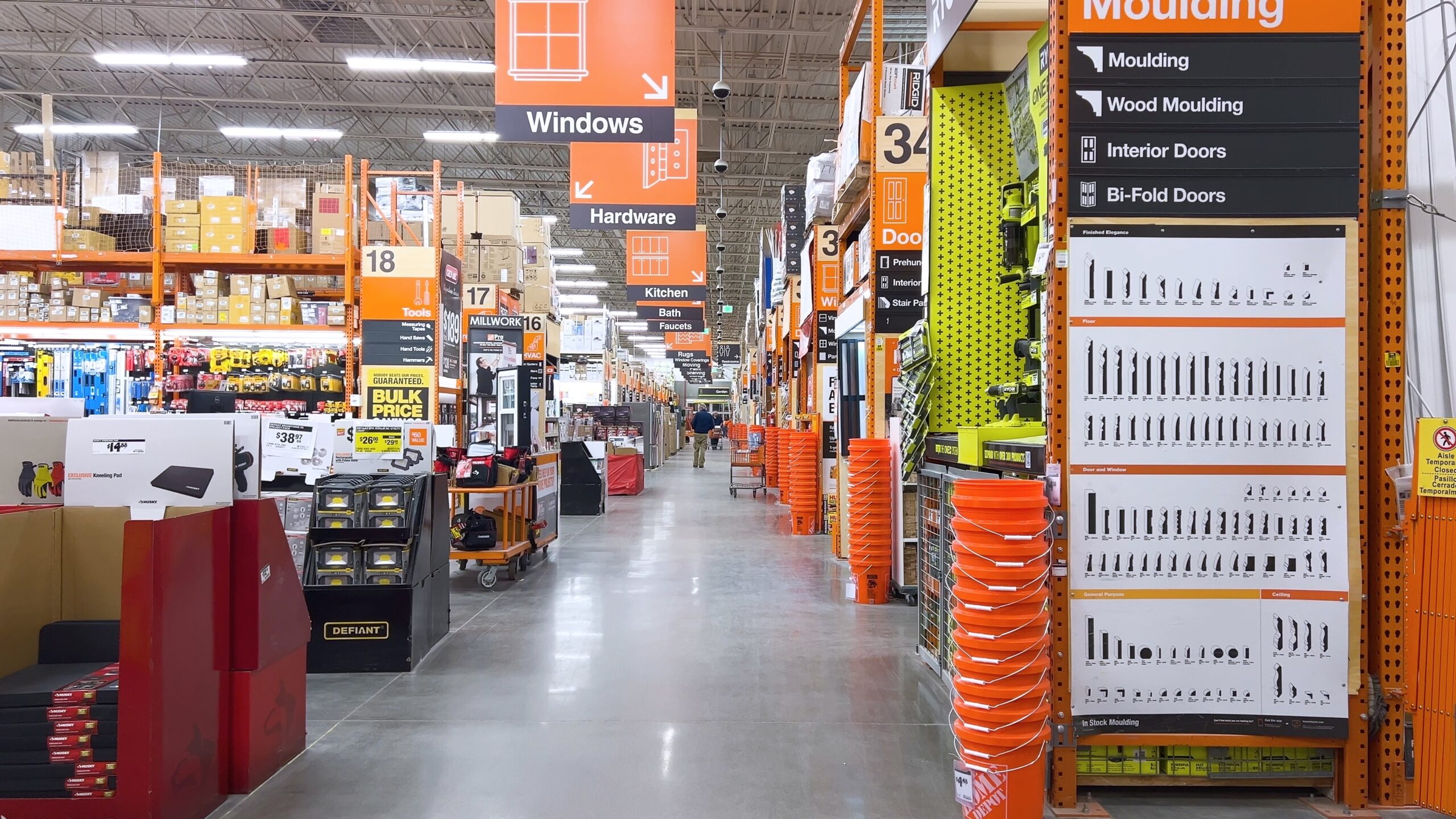
When you go to Home Depot, you’re going to see a lot of different things. Heavy products, forklifts, pallets, displays, and wide aisles. Every store has its own layout and procedures for keeping things safe. But in the day-to-day grind, things can get overlooked–or outright ignored. That’s when you can get hurt, usually from:
- Slip-and-falls. Wet concrete in the garden center, spilled paint, or cleaning solutions left without warning signs can lead to sudden falls.
- Tripping over inventory. Home Depot aisles are often packed with low-lying pallets, dropped tools, or boxes left out during stocking—easy to miss until it’s too late.
- Falling merchandise from high shelves. Heavy boxes stored 10–12 feet up can fall if they’re improperly stacked or bumped by a forklift.
- Forklift and equipment incidents. Between pallet jacks, lifts, and moving machinery, customers can find themselves surprisingly close to equipment that wasn’t secured or monitored properly.
- Parking lot dangers. Uneven pavement, potholes, loose gravel, or poorly lit areas in the lot can cause slips and falls before you even reach the entrance.
With all of these, it’s easy to see how something could go wrong. But when it happens to you or someone you’re with, it changes the equation. All of a sudden you’re left facing challenges that an injury claim can help you take care of. But that starts with a hugely important question: who’s responsible?
Who’s Responsible When I’m Injured at Home Depot?
One of the toughest things about a typical accident at Home Depot is figuring out who’s responsible for what happened. There’s a lot of moving parts with these accidents, but generally, it comes down to negligence. Here’s a simple way to think about it:
- If the store knew, or should have known, about the hazard and didn’t fix it or warn you, they may be responsible.
That lays responsibility squarely on the store management and employees, but it’s far from the only possibility:
- Outside vendors or contractors. Home Depot works with third-party companies—like tool reps, flooring vendors, or delivery crews. If one of them created a hazard or handled merchandise unsafely, they may share responsibility.
- Maintenance crews. Contractors often handle lighting, flooring repairs, and the parking lot. A broken tile, poorly repaired curb, or dim lighting that contributed to your accident could make them partially at fault.
Sometimes responsibility is easy to spot, but other times it’s not clear until someone looks deeper. Videos need to be reviewed, witnesses need to be contacted, and maintenance logs may need to be checked to see who knew what—and when. Overall though, it’s about narrowing it down so you can file a claim and get help.
What Kind of Claim Can I File After I’m Injured at Home Depot?
With an accident or injury at Home Depot, it’s a confusing time. Not only are you feeling pain and embarrassment in the moment, you could also be staring at a path ahead filled with pain, medical bills, and missed work. That’s the main reason you’d need to file an injury claim, but it brings up a question of what kind of claim you should file.
It depends on the extent of your injuries and what actually happened, but generally, you’ll file either:
- An insurance claim out of court.
- A personal injury lawsuit.
For more minor injuries or a situation where it was clear what went wrong, a quick insurance claim might be enough. But 99% of the time, Home Depot isn’t going to just admit wrongdoing. So, if their insurance company tries to skirt around what happened or you’re more seriously hurt, a lawsuit might be a better option. Either one gives you access to financial help for your:
- Medical bills
- Follow-up care and physical therapy
- Lost income if you can’t work
- Out-of-pocket costs
- Pain and suffering
- Long-term limitations caused by the injury
There’s no one-size-fits-all answer, and a lot of times, people in your position have to go through both processes. And while it’s challenging, it’s important for you moving forward.
Get Help From Maison Law After an Injury at Home Depot in Gilroy
Being injured at Home Depot isn’t just confusing and painful–it’s incredibly frustrating because it likely could have been totally prevented. Still, injuries can easily happen and when they do, our team at Maison Law will be there to help. We’ll look at all the details, figure out what went wrong and who’s responsible, then help you through the claims process. Set up a free consultation today.
