Maison Law represents ski resort injury victims in California. While skiing comes with its own inherent risk, ski accidents can be a direct result of carelessness on behalf of the ski resort, equipment failures, and reckless skiers. In these situations, a person or the resort itself can be held responsible for medical bills, lost time at work, and mental trauma.
At Maison Law, we help injured ski resort accident victims like yourself get immediate medical treatment and full compensation for the damage done to their lives. To see what legal options are available for your situation, contact us today for a no-cost, no-obligation consultation.
Do I Need a Lawyer for a Ski Resort Injury
If your skiing accident resulted in minor cuts or bruises, then it’s unlikely you’ll need a lawyer. However, if your injuries caused you to need medical treatment or miss time at work, then it is recommended to speak to one of the Personal Injury Attorneys at Maison Law.
In California, there are many popular ski resorts like Lake Tahoe’s Squaw Valley, which features over 170 skiing and snowboarding trails, or Big Bear Mountain with its 507-meter vertical terrain mountains. But if any of these resorts cause you to suffer an injury while on their property, then the attorneys at Maison Law will hold them fully responsible for the following damages:
- Economic damages: The financial damages you incurred due to the accident.
- Medical bills
- Lost Wages
- Loss of future potential earnings
- Loss of property
- Cost of property repair or replacement
- Non-economic damages: These are subjective, non-compensatory damages.
- Pain and suffering
- Emotional distress
- Depression
- Anxiety
- Loss of consortium
- Punitive damages: These are damages awarded to serve as punishment to the at-fault party.
- Reckless behavior
- Actions performed out of spite
Common Causes of Ski Resort Injuries
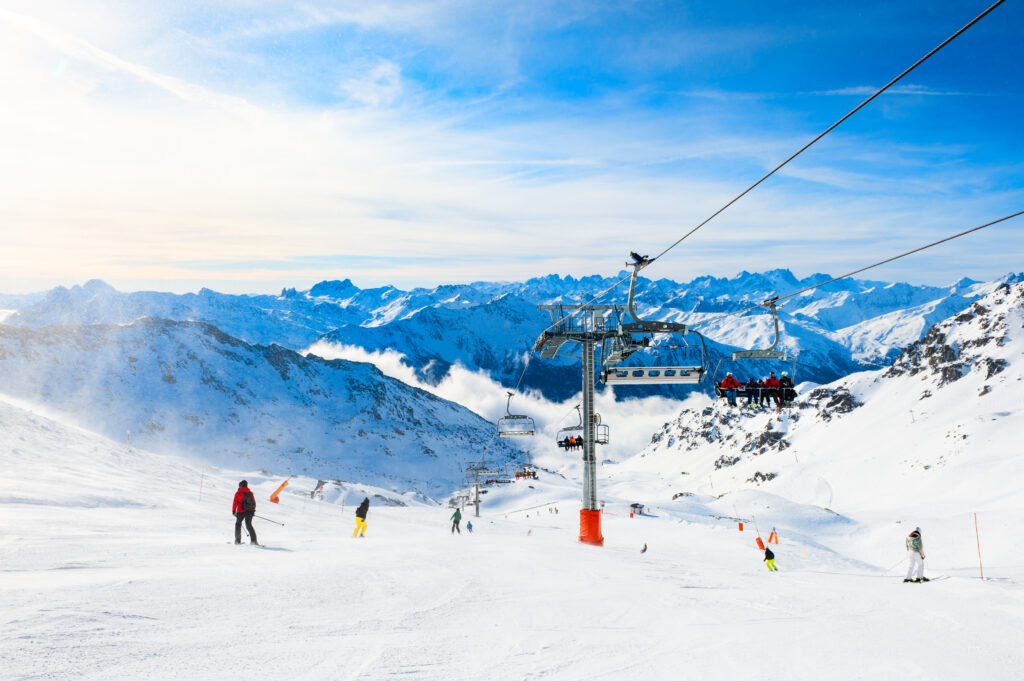
Understanding the cause of your injury not only helps you receive proper medical treatment, but reveals who is responsible for your injuries in a personal injury case. In our years of dealing with skiing injuries, we’ve found that ski resort negligence is one of the leading factors of ski injuries. Ski lifts put many ski resort guests in harm’s way if they are not properly maintained by the resort. Furthermore, if employees are not properly trained and fail to keep a guest safe, then the resort can be held responsible for their injuries. Other common causes of ski resort injuries include:
- Defective equipment: equipment such as a ski lift or a person’s skis can cause injuries if they are defective. Fault may fall on the manufacturer, as well as the resort, in these cases.
- Reckless skiers or snowboarders: some people on the slopes may attempt to ski beyond their skill level, or ignore safety rules, and end up causing someone to suffer significant injuries. In these cases, an individual may be at fault for your injuries.
Do Liability Waivers Cover Assumption of Risk When Skiing?
Liability waivers are common in recreational activities like skiing. If you’ve ever been skiing on a public or privately owned mountain, you’re knowingly agreeing to the “assumption of risk,” that comes along with skiing and are voluntarily participating in a physical activity where injuries can occur.
Even though an assumption of risk applies to most activities, companies will usually require you to sign a liability waiver to protect themselves from being sued. For example, if you were to purchase day passes to ski at a specific resort, they would most likely have you sign a liability waiver before you’re permitted to ski. A liability waiver generally covers:
- Assumed risks: the voluntary assumption of risk clause states participants understand and voluntarily assume the risk, both known and unknown, associated with gym activity.
- Inherent risks: includes a list of risk-associated activities skiers normally engage in.
- Liability waiver release: this clause releases the resort, or land-owner, and all its associates, from liability if a participant seeks damages
Can You Still Sue After Signing a Liability Waiver?
Filing a lawsuit against the responsible party can be complicated if you’ve signed a liability waiver. However, exceptions to liability waivers do exist if:
- A business or property owner violates California or federal law
- The terms of the contract are unethical, or morally wrong
- The person who had you sign the waiver used fraud, or misrepresentation to get you to sign the waiver
- You signed the waiver under duress
- You were injured due to gross negligence – when someone was injured intentionally, or an obvious danger was ignored and caused someone harm.
Proving any of these violations can be difficult, which is why it is recommended to consult with a Personal Injury Lawyer at Maison Law about legally overcoming an assumption of risk and liability waiver.
Limitations of the Assumption of Risk Doctrine in California
The Assumption of Risk Doctrine protects individuals, property owners, and business owners from being sued by those engaging in a dangerous activity, but there are limitations to how much protection is offered. For example, let’s say a person is injured while freestyle skiing on a Superpipe at a ski resort in Big Bear Mountain. Under the Assumption of Risk Doctrine, they cannot sue the resort for damages. However, certain aspects of the injury may overrule the doctrine and allow them to sue for damages.
What if an employee intentionally sought to harm and injure a guest? What if the Superpipe was not maintained or kept in good condition to prevent injuries? These are risks that a person cannot assume, which may allow them to sue the liable parties for damages even though they engaged in a dangerous activity.
Inherent Risks of Skiing
California’s Inherent Risk doctrine implements a legal presumption of risk that skiers are aware they’ll face when engaging in this activity. Inherent risks of skiing can include:
- Weather conditions
- Snow or ice conditions
- Collisions with stationary objects or other people skiing
However, resorts, property owners, individuals, or manufacturers can be held liable if they fail to take proper precautions to protect others from harm. This can apply if a skiing accident was caused by the following:
- Unsafe or malfunctioning ski lifts
- Mistakes or carelessness by ski lift operators
- Defective ski equipment
- Lack of warning for known dangers
- Lack of markers denoting ski area boundary
- Poor slope maintenance
In these cases, the inherent risk doctrine may not apply. To understand your legal options, please do not hesitate to contact one of the attorneys at Maison Law to discuss the details of your case free of charge.
Contact Maison Law | Ski Resort Injury Lawyers
If you or a loved one has been injured in a ski resort accident in California, our team of personal injury attorneys at Maison Law can help. Our firm will investigate the circumstances of your accident and gather evidence to reach a successful settlement for your case. Contact Maison Law today for a free, no-risk case consultation and case evaluation. No upfront money is required, and you don’t pay a dime until your case is won.